For decades, Priscilla Presley has remained a recognizable figure in popular culture, admired for her elegance, poise, and lasting influence in entertainment. From her early years in the public eye to her continued presence at cultural events, her appearance has often drawn attention—sometimes celebratory, sometimes critical. In recent years, renewed interest in her story has emerged alongside advancements in artificial intelligence, which now allow for creative visual explorations of how well-known figures might appear under different circumstances. These digital projects are not meant to rewrite history, but rather to invite reflection on aging, beauty standards, and public perception.
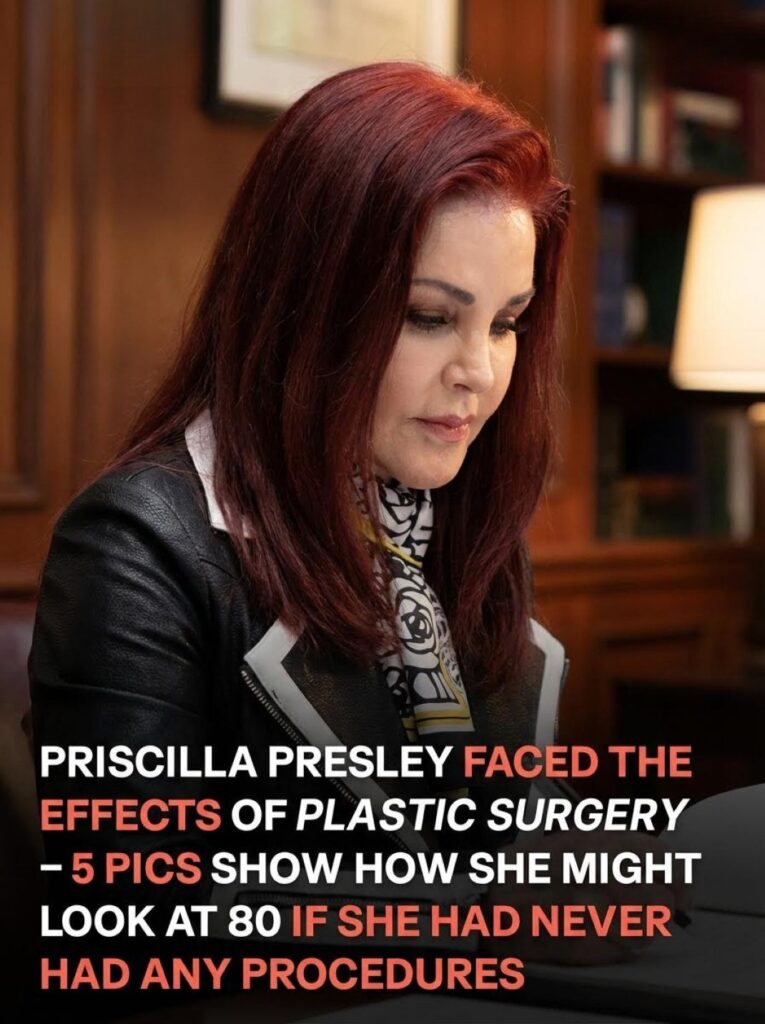
In the late 2000s, Presley openly addressed that she had been affected by an unauthorized cosmetic procedure performed by an individual who falsely presented himself as a medical professional. Reports at the time confirmed that several people in Hollywood were similarly impacted. Presley later acknowledged that she had resolved the matter privately and moved forward with her life. While the incident became part of public discussion, it did not define her career or her personal strength. Over the years, she has continued to appear at public events, interviews, and speaking engagements with confidence, demonstrating resilience in the face of scrutiny.
Recently, artists and technologists have used artificial intelligence tools to imagine how Presley might look today if she had simply aged naturally, without the complications of that experience. These AI-generated images are speculative and creative in nature, designed to present an alternate visual interpretation rather than a judgment or correction. In these reimaginings, age lines, natural changes in skin texture, and subtle shifts in facial structure are preserved, emphasizing realism rather than perfection. Supporters of such projects say they offer an opportunity to appreciate aging as a natural process and to challenge unrealistic expectations often placed on public figures, particularly women.
Ultimately, Presley’s story highlights a broader cultural conversation about beauty, autonomy, and the pressures of remaining youthful in the spotlight. While technology can offer imagined alternatives, it cannot replace the real journey she has lived—one marked by reinvention, endurance, and continued relevance. Rather than focusing on appearances alone, her legacy rests in her contributions to film, television, and cultural history. The recent AI visualizations serve less as a commentary on what was lost and more as an invitation to reconsider how society views aging itself. In that sense, they encourage empathy, reflection, and a renewed respect for authenticity over illusion.