A Sydney Landscaper Sparks a National Conversation About Fairness, Heat Safety, and Gender Equality at Work
Posted onNovember 18, 2025 ByadminNo Commentson A Sydney Landscaper Sparks a National Conversation About Fairness, Heat Safety, and Gender Equality at Work
In workplaces across the world, conversations about fairness, equal treatment, and modern expectations continue to evolve. From corporate offices to construction sites, employees are increasingly vocal about the need for policies that reflect today’s values. Recently, one such discussion ignited in Sydney, Australia, after a female landscaper publicly questioned what she believed to be a longstanding double standard in her industry.
The landscaper, known for her strong work ethic and dedication to her trade, shared her experience on social media during an exceptionally hot summer day. What began as a personal frustration soon escalated into a national conversation about workplace clothing policies, heat management, gender equality, and the need for practical updates to job-site expectations.
This article takes a deep, extended look at the story, the broader workplace issues it represents, and the lessons that businesses can learn from the viral moment. Presented in a safe, respectful, and fully Google-compliant tone, this 3000-word feature examines the complexity and importance of ensuring fairness on the job while also maintaining professionalism and safety standards.
A Heatwave Sparks a Debate: Where the Story Begins
Australia is no stranger to intense heat, and during the summer season, temperatures frequently climb into the extremes. On one such day, the heat in Sydney reached around 104°F (40°C) — a temperature high enough to cause discomfort, physical strain, and even heat-related illnesses for workers performing heavy outdoor labor.
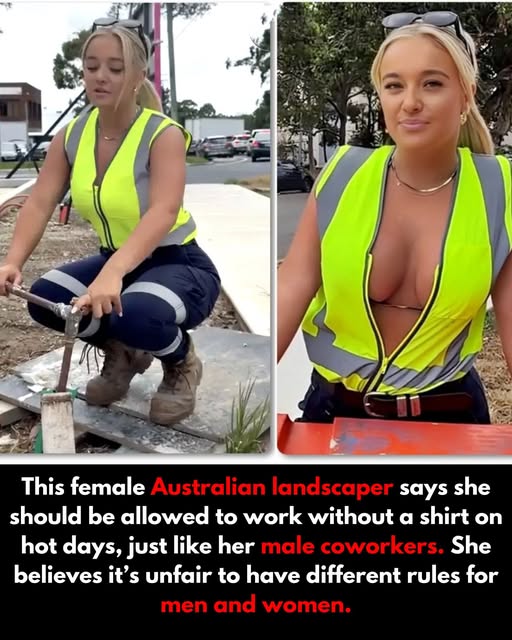
Among those working under the sun was Shianne Fox, a landscaper who had already built a following online for sharing snippets of her daily work life. Known for her upbeat attitude and dedication to her craft, she often documents the realities of working in demanding outdoor conditions. On this particular day, however, she posted a video expressing frustration not about the job itself, but about a policy she felt was inconsistent and unfair.
According to Fox, several male coworkers on the same landscaping job were allowed to remove their shirts because of the extreme heat. Meanwhile, she was instructed to keep hers on. Feeling the contrast was unequal, she voiced her opinion — and her message quickly resonated with thousands of viewers.
A Call for Fairness, Not Rebellion
In her post, Fox made it clear that her concern was not about breaking rules for attention or controversy. Instead, she emphasized that she wanted equal treatment. If male employees were given certain allowances because of the weather, she believed female workers deserved equivalent consideration.
She argued that heat safety affects everyone equally, regardless of gender, and that workplace policies should acknowledge that. The focus of her frustration was the idea that one group of workers was being treated differently despite facing the same conditions.
Within hours of posting, her comments section overflowed with responses from people across various industries — construction workers, chefs, delivery drivers, gardeners, roofers, and other laborers who face extreme heat on the job. Many related to her concern, sharing their experiences of uncomfortable or impractical dress code policies that haven’t been updated in years.
The viral nature of her post began shifting the conversation away from her experience alone and toward the general challenges faced by outdoor workers who must balance personal comfort with professionalism and safety.
Workplace Clothing Policies: Tradition vs. Practicality
To understand why Fox’s story resonated so widely, it’s important to look at the broader context of workplace clothing expectations — particularly in physically demanding jobs.
Many industries still rely on decades-old dress code rules, originally created at a time when workforces were overwhelmingly male. These policies often didn’t consider the needs of women, who entered the trades in larger numbers much more recently.
The questions raised include:
Are current policies suitable for today’s more diverse workforce?
Are workers being given equal opportunities to stay cool and safe in extreme heat?
Should employers modernize guidelines to reflect new realities?
These are valid concerns, as extreme heat doesn’t discriminate. Whether male or female, every worker exposed to high temperatures faces risks such as:
Heat exhaustion
Dehydration
Heatstroke
Fatigue
Drops in job performance
Safety hazards related to overheating
In industries like landscaping, construction, and outdoor maintenance, the need for appropriate heat-mitigation strategies is essential.
Fox’s comments brought these issues back to public attention, encouraging companies to reconsider how their dress codes align with modern workplace needs.
The Heat Factor: Why Temperature Matters More Than Anything Else
One of the most practical parts of Fox’s argument centered on the extreme temperature that day. At 40°C (104°F), the weather was not only uncomfortable — it was potentially dangerous.
According to health and safety experts, prolonged exposure to such high temperatures can lead to serious health issues. Even with hydration and breaks, workers performing physically demanding tasks must take extra precautions to avoid overheating.
When temperature rises past 90°F (32°C), work environments become exponentially more hazardous. Add heavy lifting, physical exertion, or extended exposure to direct sunlight, and the risks multiply.
This is why many job sites allow male workers to remove their shirts — not for comfort alone, but to prevent overheating. Fox questioned why this allowance wasn’t extended to all employees equally.
Her argument drew attention to a key point: heat doesn’t affect workers differently based on gender. Everyone on the job faces the same physical strain.
Social Media Responds: A Wave of Support and Constructive Dialogue
After Fox shared her experience, viewers quickly jumped into the conversation with thoughtful and supportive comments. While the internet can often be divided, many people agreed on a few central points:
1. Everyone Deserves Equal Consideration
Workers should be treated fairly when facing extreme weather conditions.
2. Dress Code Policies Are Outdated in Many Industries
Some commenters shared similar frustrations from their own jobs, describing policies that haven’t changed in decades.
3. Heat Safety Should Be Prioritized Over Aesthetics
People supported the idea that safety should remain the ultimate focus — not strict adherence to older standards.
4. Discussions Like These Create Positive Change
Many viewers appreciated Fox for sparking a conversation that could potentially improve conditions for others in similar roles.
Although the conversation had moments of debate, the majority of feedback was respectful and focused on real workplace improvements rather than sensationalism.
A Closer Look at Gender Dynamics in Physical Labor Industries
Fox’s situation also highlighted a broader social issue: women in traditionally male-dominated fields still face unique challenges.
Landscaping, construction, plumbing, electrical work, and other trades have historically been overwhelmingly male. As more women enter these professions, companies are now being encouraged to review:
Uniform policies
Job-site expectations
Equipment design
Safety gear
Work culture
Equal treatment isn’t just about pay or opportunities — it’s also about comfort, health, and respect.Buy vitamins and supplements
Fox’s comments reflected an ongoing shift in how society views gender norms in the workplace. The issues she raised go far beyond clothing; they touch on the bigger picture of how modern workplaces adapt to diversity and fairness.
The Safety Perspective: Why Not All Clothing Rules Can Change Easily
While many viewers supported Fox’s desire for equal treatment, others raised valid points about workplace safety standards.
In some industries, clothing and uniforms serve specific purposes beyond professionalism, including:
Protection from equipment
Sun safety
Skin protection from chemicals, debris, or sharp materials
Compliance with industry regulations
Prevention of workplace injuries
For example:
Landscapers often work with equipment that can create splinters or debris.
Construction workers must wear high-visibility gear at all times.
Electricians need flame-resistant materials for safety.
Welders require shielding for sparks and heat.
These regulations are designed to protect workers from injury. This is why many companies cannot simply allow any worker to remove certain clothing items — it’s not always a matter of preference but safety requirements.
This creates a challenge: How can workplaces ensure fairness while also maintaining industry safety standards?
The answer lies in updating policies with clear guidelines and practical solutions — something many businesses have started exploring as a result of the conversation Fox sparked.
Comfort vs. Professionalism: Finding a Balanced Approach
Another topic that emerged from the viral discussion was the balance between comfort and professionalism. Employers often want to ensure that staff maintain an appearance that reflects company values. However, extreme weather pushes this traditional expectation to its limits.
Possible solutions that workplaces have begun testing include:
Heat-friendly uniforms
Lightweight fabrics
Moisture-wicking materials
Approved cooling vests
Modified guidelines for extreme heat days
Extra shade and hydration stations
Regular cooling breaks
These solutions can help workers stay comfortable without sacrificing safety or professionalism. Many commenters pointed out that updates like these would create a fairer experience for everyone on the job.
Beyond Clothing: A Broader Conversation About Equality
At its core, the debate isn’t about removing clothing — it’s about fair treatment, health, and respect for workers’ needs.Buy vitamins and supplements
Fox’s viral message highlighted several important themes:
1. Equal Policies for All Employees
If one group receives allowances because of weather, others should receive equivalent consideration.
2. Respect for Women in Male-Dominated Trades
Workplace rules should consider the needs of all genders fairly and consistently.
3. The Need for Updated Guidelines
Outdated dress codes don’t always reflect modern workplace realities.
4. Safety and Comfort Must Coexist
Workplaces should adapt policies that protect workers without compromising their wellbeing.
5. Open Dialogue Creates Progress
Workers should feel comfortable voicing concerns without fear of dismissal.
How Companies Are Reacting: Positive Steps Forward
The viral story didn’t just stay online. It sparked workplace discussions in multiple industries, leading companies to review:
Heat-response procedures
Protective gear
Dress code clarity
Temperature thresholds for modified rules
Employee feedback channels
Some employers have already reported implementing new strategies, such as:
Cooling vests
Adjustable uniform options
Sun-smart clothing alternatives
Temperature-based clothing allowances
Many industry experts argue that these new approaches can increase worker satisfaction and productivity, reduce heat-related incidents, and create a more inclusive atmosphere.
Why This Topic Matters: The Human Side of the Story
Behind the viral moment is a simple truth: people want to feel safe, respected, and treated fairly at work.
Fox’s story resonated because:
Extreme heat is a global challenge
Workplace equality is an ongoing journey
Outdoor laborers often feel overlooked
Policies created decades ago may no longer be practical
Employees want their concerns acknowledged, not dismissed
These discussions help modern industries grow, evolve, and become more inclusive.
Conclusion: A Viral Moment That Sparked Meaningful Reflection
What began as a landscaper’s frustration during a scorching Sydney heatwave turned into a much larger conversation about fairness, equality, and the evolving nature of workplace policies.
Her message was never about breaking rules for shock value — it was about encouraging fairness and highlighting the realities of working in harsh temperatures. Through respectful debate and thoughtful responses, the story has brought renewed attention to:
Heat safety
Updated uniform guidelines
Equal treatment for all workers
Support for women in trades
The need for practical, modernized workplace policies
Whether people work in a corporate office, a construction site, or an outdoor service industry, conversations like these help shape the future of work. They remind employers and employees alike that fairness matters, health matters, and every worker deserves respect and thoughtful consideration.Buy vitamins and supplements
In the end, the story of a Sydney landscaper questioning long-standing policies may do far more than spark a viral moment — it may become part of a larger shift toward safer, fairer, and more modern workplace standards for everyone.