Astronomers Discover Earth-Sized Exoplanet Gliese 12 b in the Habitable Zone – A Major Step in the Search for Life Beyond Earth
Astronomers have made an exciting discovery that could bring us closer to understanding the potential for life beyond our planet. Gliese 12 b, an Earth-sized exoplanet located only 40 light years away, has been identified as residing in the habitable zone of its star, making it one of the most promising candidates for supporting liquid water – and potentially life – outside our Solar System.
A Key Discovery with NASA’s TESS Satellite
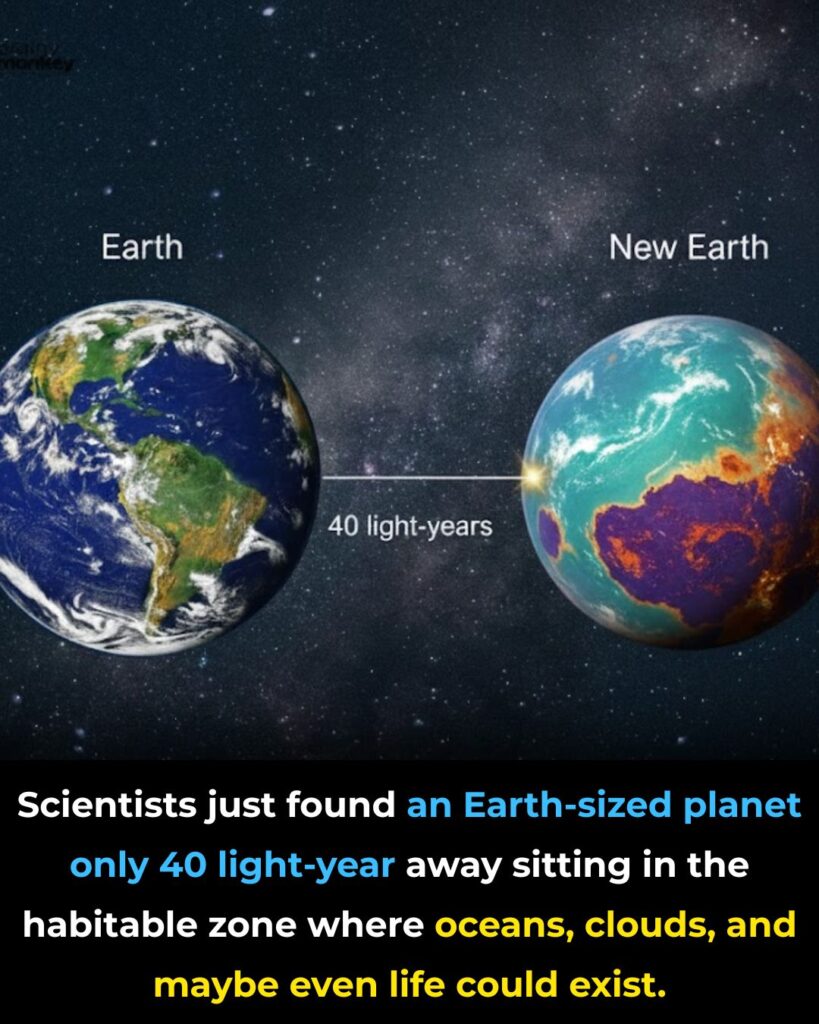
This groundbreaking discovery was made in May 2024 using NASA’s Transiting Exoplanet Survey Satellite (TESS). Gliese 12 b has a radius very similar to that of Earth, suggesting that it is a rocky planet rather than a gas giant. It orbits a cool red dwarf star known as Gliese 12, which is only about 27 percent the size of our Sun. The planet completes one orbit around its star every 12.8 days, placing it at just the right distance to possibly allow for temperate conditions – not too hot and not too cold.
What Makes Gliese 12 b Special?
One of the most intriguing aspects of Gliese 12 b is its location within the habitable zone, also known as the “Goldilocks zone.” According to UCL News, this is the region around a star where the conditions are ideal for liquid water to exist on the planet’s surface. This is considered one of the key prerequisites for life as we know it. Scientists have long speculated about the possibility of life on exoplanets within this zone, and Gliese 12 b is now one of the clearest candidates for detailed study.
The planet’s host star, Gliese 12, is relatively calm compared to other red dwarfs. Red dwarfs are known for emitting bursts of radiation that can strip away the atmospheres of nearby planets, but Gliese 12’s relative stability could provide an environment where an atmosphere could thrive without the threat of harmful radiation, further enhancing the chances for life to exist.
The Potential for Habitability and Life
What makes Gliese 12 b so fascinating to astronomers is its potential to help us better understand the conditions that could support life on exoplanets. As the search for Earth-like worlds continues, the discovery of a planet with Earth-like features in the habitable zone represents a major step forward. Scientists believe that the study of planets like Gliese 12 b will provide key insights into whether other planets can sustain atmospheres, liquid water, and climates that are conducive to life.
In particular, astronomers are keen to explore whether the planet has the right combination of gases in its atmosphere to allow for the formation of oceans and clouds, and if these features could potentially lead to the development of life. Its proximity to Earth – just 40 light years away – makes it an ideal candidate for detailed study, and it’s far enough within reach that future space telescopes can gather data without having to examine distant, unreachable exoplanets.
The Role of the James Webb Space Telescope
The next step in studying Gliese 12 b is using the James Webb Space Telescope (JWST), set to play a crucial role in analyzing the planet’s atmosphere. According to NBC News, Webb will be able to search for key signs of habitability, including water vapor, cloud formations, and even biosignatures – signs that could indicate the presence of life. The telescope’s advanced capabilities will allow scientists to detect faint atmospheric features, providing valuable data on the composition of the planet’s air and its potential for supporting life.
The possibility that Gliese 12 b could retain a thin atmosphere similar to Earth’s opens up fascinating possibilities. It could resemble a temperate version of Venus or Earth, with the right balance of gases and conditions needed to sustain life. While much is still unknown about the exoplanet’s atmosphere and surface conditions, the potential for groundbreaking discoveries in the coming years is enormous.
A Nearby Laboratory for Testing Theories of Habitability
At just 40 light years away, Gliese 12 b is relatively close in astronomical terms. This makes it an ideal laboratory for testing theories about planetary habitability and the conditions required for life beyond Earth. The planet’s proximity offers scientists an unprecedented opportunity to study its atmosphere, surface, and environmental conditions in great detail. With advanced tools like the James Webb Space Telescope, researchers hope to answer some of the most profound questions about the existence of life elsewhere in the universe.
Conclusion: The Future of Exoplanet Exploration
The discovery of Gliese 12 b is a major milestone in the ongoing search for Earth-like planets in the cosmos. As scientists continue to investigate this planet’s potential to support life, it provides a powerful reminder of the possibilities that await in the vast expanse of the universe. With future missions and groundbreaking technologies like the James Webb Space Telescope, the exploration of exoplanets is likely to reveal even more exciting discoveries that could change our understanding of life beyond Earth.