In a revolutionary step for neuroscience and medical technology, MIT researchers have developed injectable brain chips that can treat neurological diseases without the need for invasive surgery. These tiny devices can be delivered through a simple injection and are designed to monitor and regulate brain activity in real time.
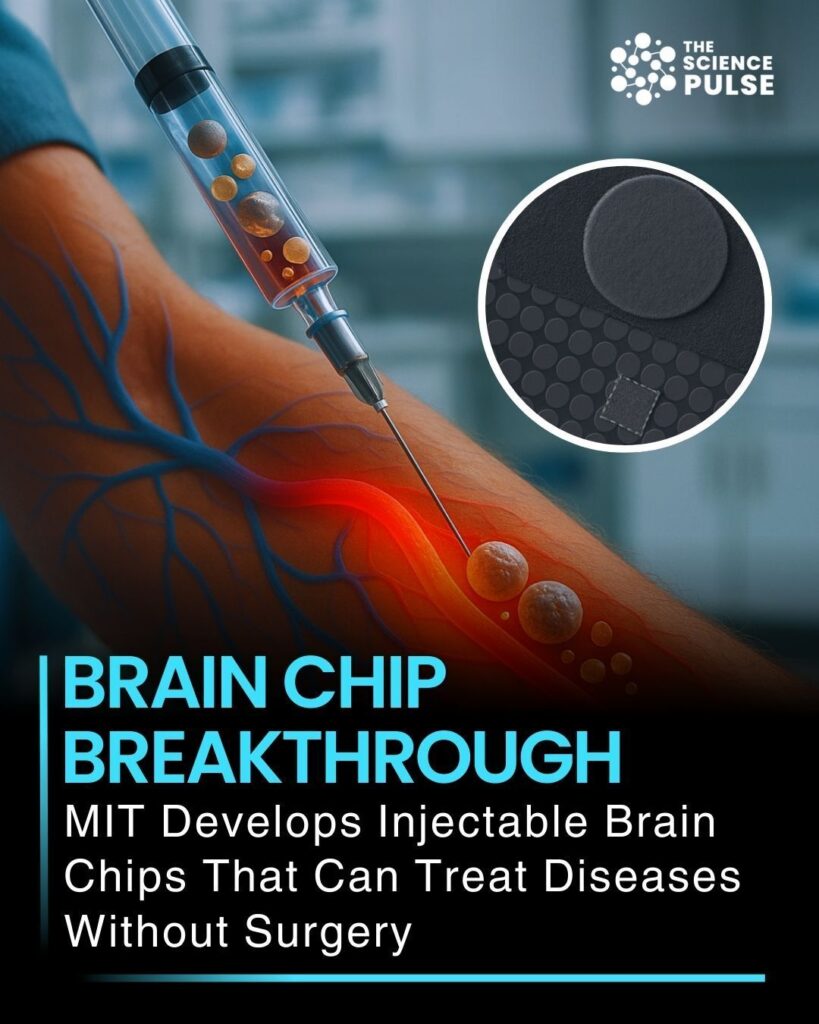
Unlike traditional implants that require complex surgical procedures, these injectable chips offer a minimally invasive alternative that reduces risk, recovery time, and potential complications. They have the potential to treat conditions such as epilepsy, Parkinson’s disease, and even depression by directly interacting with neural circuits.
The technology combines advanced bioengineering, microelectronics, and precision medicine, allowing the chips to adapt to the brain’s signals and provide personalised therapy. Experts believe this innovation could transform the future of neurological treatment, making therapies faster, safer, and more effective.
This breakthrough also opens doors to understanding the brain like never before, offering researchers unprecedented insights into neural networks and brain function. With continued development, injectable brain chips could redefine how we treat complex brain disorders, improving the lives of millions worldwide.