You finished dinner at 10 PM (or couldn’t resist that midnight bowl of cereal). Now you’re heading to bed with a slightly full stomach and you remember someone once told you: “If you eat late, always sleep on your left side.” Is this just another old-wives’ tale, or is there something to it?
The short answer
Yes there is solid anatomical and physiological reasoning why sleeping on your left side is noticeably better for digestion when you eat close to bedtime. Thousands of gastroenterologists quietly recommend it to their reflux and heartburn patients for the same reasons your grandmother probably did.
Why the left side wins.
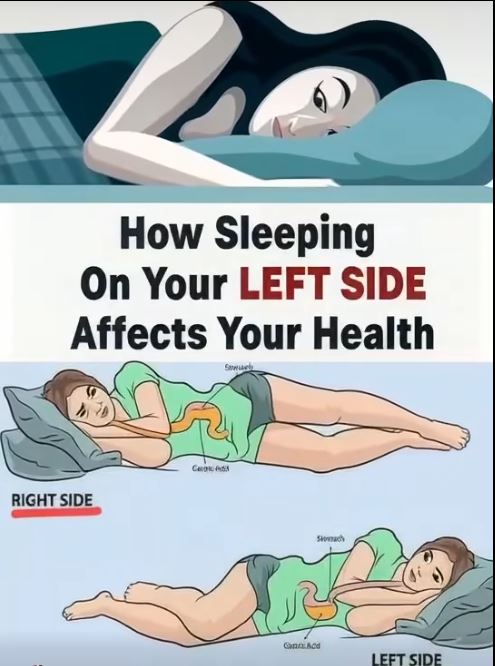
Picture your stomach as a lopsided, J-shaped bag lying in your abdomen:
- The entrance (where the esophagus comes in) is on the right side of the stomach.
- The exit (the pylorus, which leads to the small intestine) is lower and toward the left/middle.
- The gastroesophageal junction (the valve that keeps acid down) sits higher when you’re on your left side.
When you lie on your left side:
- Gravity keeps the stomach acid below the esophagus → less reflux/heartburn
- The main bulk of the stomach (the fundus and body) hangs downward, so recently eaten food settles away from the esophagus
- The exit (pylorus) is now the lowest point → food and gastric juices move more easily out of the stomach and into the duodenum instead of sloshing back up
When you lie on your right side, everything flips: acid can pool right at the esophageal opening, and the exit is now higher, slowing gastric emptying. Studies using pH probes show that right-side sleeping after a meal can double or triple the amount of time acid spends in the esophagus compared with left-side sleeping.
What the actual research says
- A 2010 study in Journal of Clinical Gastroenterology found that patients with GERD who slept on their left side had significantly fewer reflux episodes and faster acid clearance than those on the right side.
- A 2021 Indian study using high-resolution manometry showed gastric emptying is 10–20 % faster in the left lateral position after a meal.
- Even in healthy people with no reflux, right-side sleeping after eating increases the number of “transient lower esophageal sphincter relaxations” – the moments when the valve randomly opens and lets acid up.
Practical rules of thumb people swear by
- Ate a normal meal less than 2–3 hours before bed? → Left side is noticeably kinder.
- Had something spicy, fatty, tomato-based, chocolate, alcohol, or a very big portion? → Left side can be the difference between waking up fine or waking up with burning in your throat.
- Pregnant and dealing with heartburn? Left-side sleeping is already the official recommendation worldwide (improves blood flow to the baby too).
- If you have left-sided stomach or esophageal issues (rare), or certain types of hiatal hernia, the advice might flip.
- Severe reflux sometimes needs a slightly elevated head (wedge pillow or raised bed) in addition to left-side sleeping.
- If you wake up at 3 AM still feeling heavy or bloated, the bigger issue is probably eating too close to bedtime regardless of position.
Yes, the old advice is backed by anatomy and modern studies: when you eat late, sleeping on your left side genuinely helps your stomach empty faster and keeps acid where it belongs. It’s free, takes zero extra effort, and for many people it’s the difference between a peaceful night and an antacid-commercial night.
So next time you cave to that late-night snack, just roll over to the left when your head hits the pillow. Your esophagus will thank you in the morning.