Martin Lewis has once again weighed in with some straight-talking advice, and this time targeting a kitchen gadget that many people swear by: the air fryer. While he’s previously warned about the hidden costs of certain debit cards, his latest reality-check is aimed at the nation’s favourite small appliance.
Air fryers exploded in popularity during and after the pandemic, especially as energy bills soared. They’re heavily marketed as healthier than deep-fat fryers and repeatedly claimed to be far cheaper to run than a traditional oven. But according to Martin Lewis, we may have been sold a bit of a myth.
Martin Lewis’s no-nonsense take on air fryers
On a recent episode of the BBC’s The Martin Lewis Podcast, the money-saving expert explained that air fryers aren’t always the cheapest option. In fact, for bigger meals a conventional oven can often work out less expensive.
He pointed out a key difference in how the appliances use energy:
- A microwave or air fryer runs at full power the entire time it’s switched on.
- An oven, however, heats up to the set temperature and then only kicks in periodically to maintain it, meaning it’s not drawing maximum power the whole time.
Lewis gave a clear example to drive the point home:
“If you’re doing a full roast dinner and cooking lots of jacket potatoes, it’s probably cheaper to put them all in the oven than to cook five or six in the microwave or air fryer. That’s because every extra item you add to a microwave or air fryer makes you run it for longer — they only heat the food that’s actually inside at that moment.”
In short: great for quick, small portions; not automatically the winner when you’re cooking for the whole family or batch-cooking.
So while air fryers still have their place (especially for speedy single servings or crispy snacks), don’t assume they’re always the most cost-effective choice. As Martin Lewis keeps reminding us: it all depends on what and how much you’re cooking.
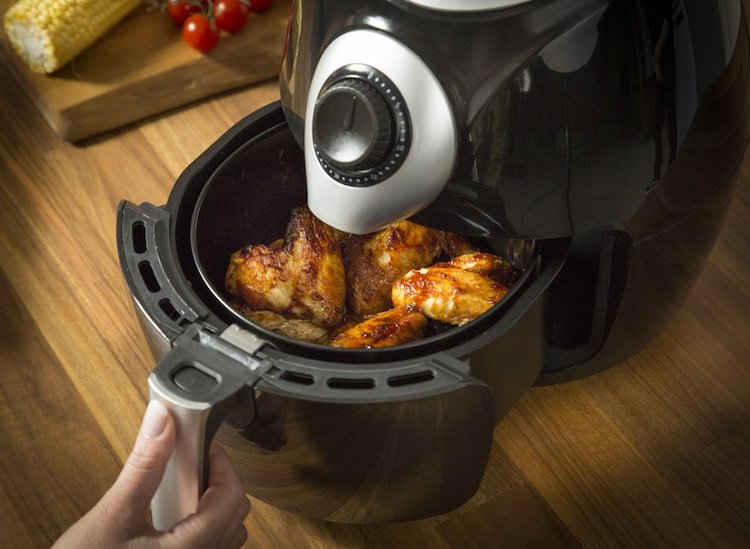
However, do not take this as the absolute condemnation of the air fryer. For example, in the above case, if the number of jacket potatoes was just one instead of 10, the air fryer/microwave wins without any doubt. Be that as it may, we cannot be doing mathematics every time to figure out which option is cheaper for a given amount of food. Or, can we?