Herpes zoster, commonly known as shingles, is a viral condition caused by the varicella-zoster virus. This is the same virus responsible for chickenpox. After a person recovers from chickenpox, the virus does not leave the body. Instead, it stays dormant in nerve tissue near the spinal cord and brain. Years or even decades later, the virus can reactivate and appear as herpes zoster.
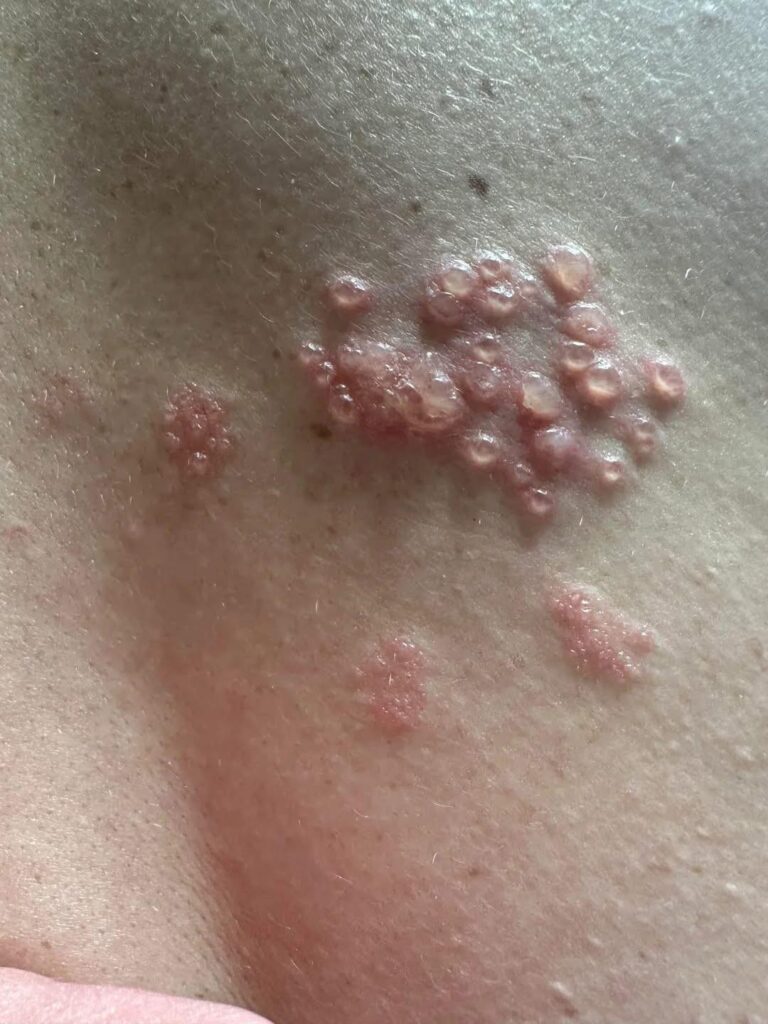
Shingles usually begins with early warning symptoms before anything is visible on the skin. These may include tingling, burning, itching, or sharp pain in a specific area on one side of the body or face. Some people also experience fatigue, headache, mild fever, or sensitivity to touch. This early nerve pain is a key feature of herpes zoster and helps distinguish it from many other skin conditions.
After a few days, a skin rash develops, typically appearing as a band or strip that follows the path of a nerve. The rash most often occurs on the torso, such as the chest, back, or abdomen, but it can also affect the face, neck, or other areas. The rash starts as red patches that quickly turn into clusters of small, fluid-filled blisters. These blisters are usually grouped closely together, which is a classic visual sign of shingles.
Over time, the blisters may break open, ooze, and then crust over. This process generally takes about two to four weeks. As healing occurs, the skin may remain sensitive or discolored for some time. In many cases, the pain fades as the rash heals, but for some individuals, nerve pain can persist even after the skin looks normal again. This complication is called postherpetic neuralgia and can last for months or, in rare cases, years.
Herpes zoster is not the same as genital herpes, even though the word “herpes” is used for both. They are caused by different viruses. Shingles is only contagious to people who have never had chickenpox or the chickenpox vaccine, and even then, it can only cause chickenpox, not shingles. The virus spreads through direct contact with the fluid from open blisters, not through casual contact or breathing.
Shingles is more common in older adults and in people with weakened immune systems due to stress, illness, or certain medications. Early medical treatment with antiviral medications can help shorten the duration of the illness, reduce pain, and lower the risk of complications if started promptly.
Vaccines are available and are highly effective at reducing the risk of developing herpes zoster and its complications, especially in adults over 50.