Stephanie Fuchs, a German woman, met Sokoine, a Maasai man, in January 2011 while volunteering at a research camp in Tanzania. She was immediately fascinated by him and the Maasai culture, despite knowing very little about it. Over time, their friendship grew into love, and after 11 months, Stephanie moved in with Sokoine at his family’s traditional Maasai homestead, called a boma, in January 2012.
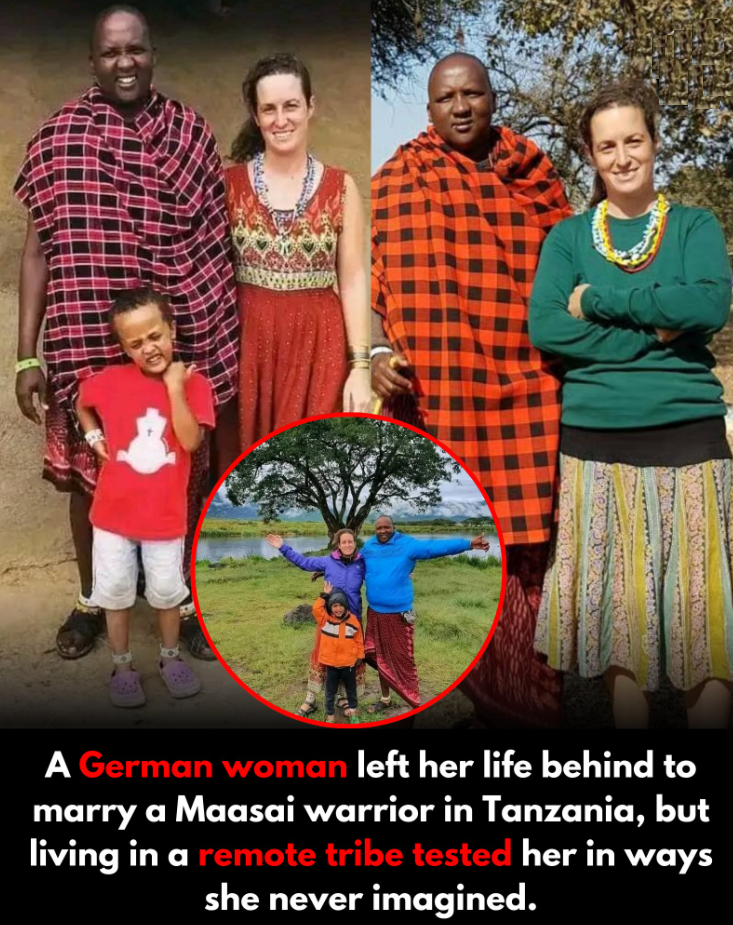
Adapting to Maasai life proved much harder than she expected. Simple daily tasks like fetching water, cooking over a fire, and following strict customs were completely new to her. The Maasai community has rigid traditions, and Stephanie often felt isolated as an outsider. She struggled to understand the social rules, including gender roles, and faced criticism from elders for her different ways. Even communicating with the family and neighbors was challenging due to language barriers. At times, the cultural differences felt overwhelming, and Stephanie considered giving up on the marriage.
When their son Yannik was born in 2016, the pressures increased. She had to navigate raising a child in a traditional community while balancing her own upbringing and values from Germany. Cultural expectations around parenting, domestic responsibilities, and her role as a woman in the Maasai tribe added further stress. Stephanie describes these years as full of “battles,” where every day required patience, learning, and compromise.
Despite the hardships, Stephanie persevered. She gradually learned to participate in Maasai customs, from community events to daily chores, while maintaining her personal identity. She adapted to the lifestyle, accepted the challenges of living without many modern conveniences, and found ways to raise her son with a mix of Maasai traditions and her own values. Stephanie credits her resilience to love, determination, and the understanding that leaving would mean regret.
Over the years, Stephanie has shared her story publicly to highlight the realities of intercultural marriage. News outlets, including Tuko.co.ke, have featured her journey, along with photographs showing her, Sokoine, and their son navigating life in Tanzania. Her story captures the balance between respecting traditional culture and preserving one’s individuality.
Stephanie’s experience demonstrates the beauty of love across cultures but also the very real struggles of adjusting to an entirely new way of life. It is a story of patience, adaptation, and personal growth in the face of constant challenges. Despite all difficulties, Stephanie says she has no regrets and continues to live in Tanzania with her family, embracing both Maasai tradition and her own identity.