Swedish researchers have developed microscopic nanobots that can travel through the bloodstream and locate arterial plaque with remarkable accuracy. These nanobots are small enough to move smoothly through even narrow blood vessels, and they are equipped with magnetic guidance features that allow doctors to steer them through the cardiovascular system. Once they reach a blockage, they release specialized plaque-dissolving enzymes that break down the fatty buildup without harming the surrounding vessel walls. This level of precision opens the door to an entirely new form of cardiovascular care, one that could greatly reduce the need for traditional surgical procedures.
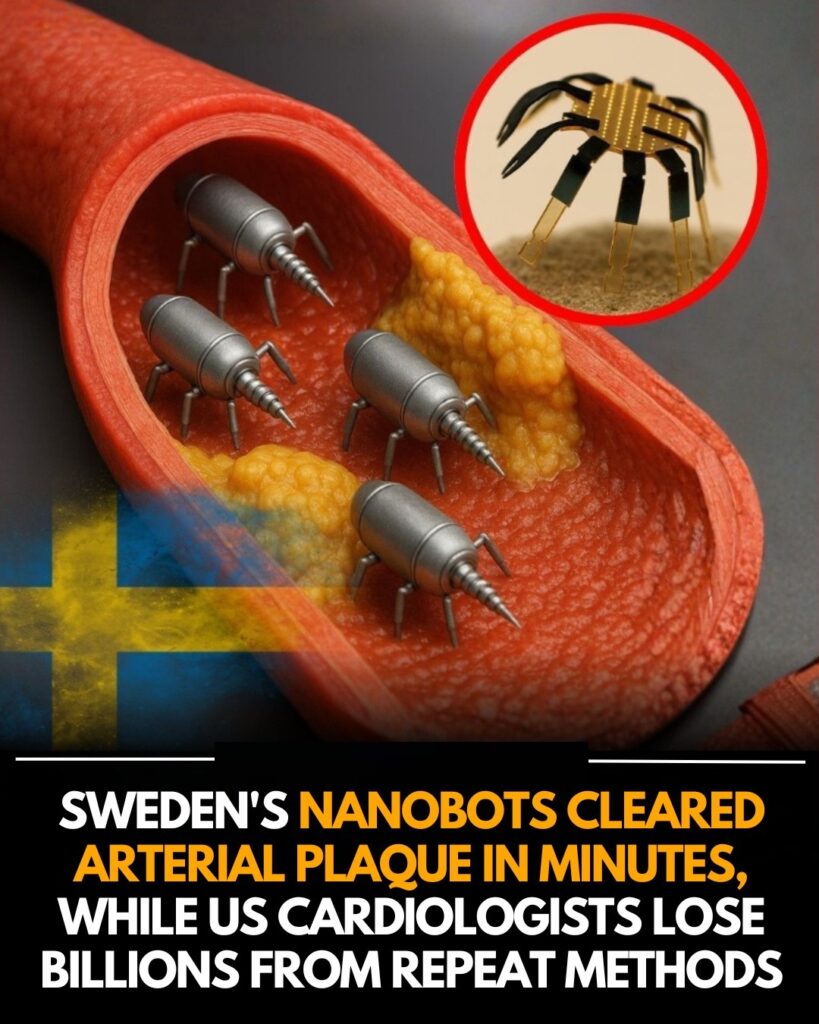
Cardiovascular disease remains one of the leading causes of death worldwide, and many treatments revolve around physically opening blocked arteries. Procedures such as angioplasty and stenting can be effective, but they are invasive and often require repeat interventions. Stents can become blocked again over time, and angioplasty may need to be repeated if additional plaque forms. These approaches also involve recovery periods, hospital stays, and potential complications. The idea that doctors could one day send tiny programmable machines directly to the source of a blockage and watch them clear it in real time represents a major breakthrough in how heart disease might be managed.
Early laboratory experiments have shown that these nanobots can dissolve plaque in a very short amount of time. Instead of relying on force to widen arteries, the nanobots gradually break down harmful deposits layer by layer. This approach reduces strain on the tissue and minimizes the risk of inflammation or scarring. If the technology continues to perform well under more rigorous testing, it could become a far safer and more comfortable alternative for patients who are not ideal candidates for surgery or who face complications from conventional procedures.
One of the most exciting aspects of this research is the potential for personalized treatment. Rather than using the same general technique for every patient, doctors could program nanobots to target specific types of plaque or focus on areas where blockages tend to reoccur. They could even design treatment plans that address plaque formation before it becomes dangerous. This form of precision medicine could dramatically reduce long-term cardiovascular risk and help patients maintain healthier arteries as they age.
Medical teams are also exploring how nanobot therapy could shorten recovery times. Traditional heart procedures often require days or even weeks of rest, while nanobots may be able to perform their work without requiring any incisions at all. The hope is that patients might one day walk into a clinic, undergo a brief supervised nanobot treatment, and return home the same day with clearer arteries and minimal discomfort.
Of course, clinical trials will be essential before this technology becomes available to the public. Researchers must confirm that the nanobots operate safely within the human body, remain stable over time, and can be fully retrieved or dissolved after completing their task. But if upcoming trials deliver results similar to the early laboratory findings, nanobot therapy could reshape the future of cardiovascular medicine.
This advancement has the potential to reduce the global burden of heart disease, lessen dependence on major surgeries, and give millions of patients a safer, faster, and more personalized approach to treatment. The work being done in Sweden may be an early glimpse into a future where microscopic machines quietly safeguard our health from within.