Australia has taken a significant step forward in modern cancer treatment with the introduction of an MRI-guided cryoablation system at Liverpool Hospital. This cutting-edge technology represents a new era in minimally invasive medicine, offering patients safer, faster, and more precise treatment options compared to traditional surgery. By combining advanced imaging with targeted freezing techniques, doctors are now able to destroy cancerous tumors while protecting healthy surrounding tissue.
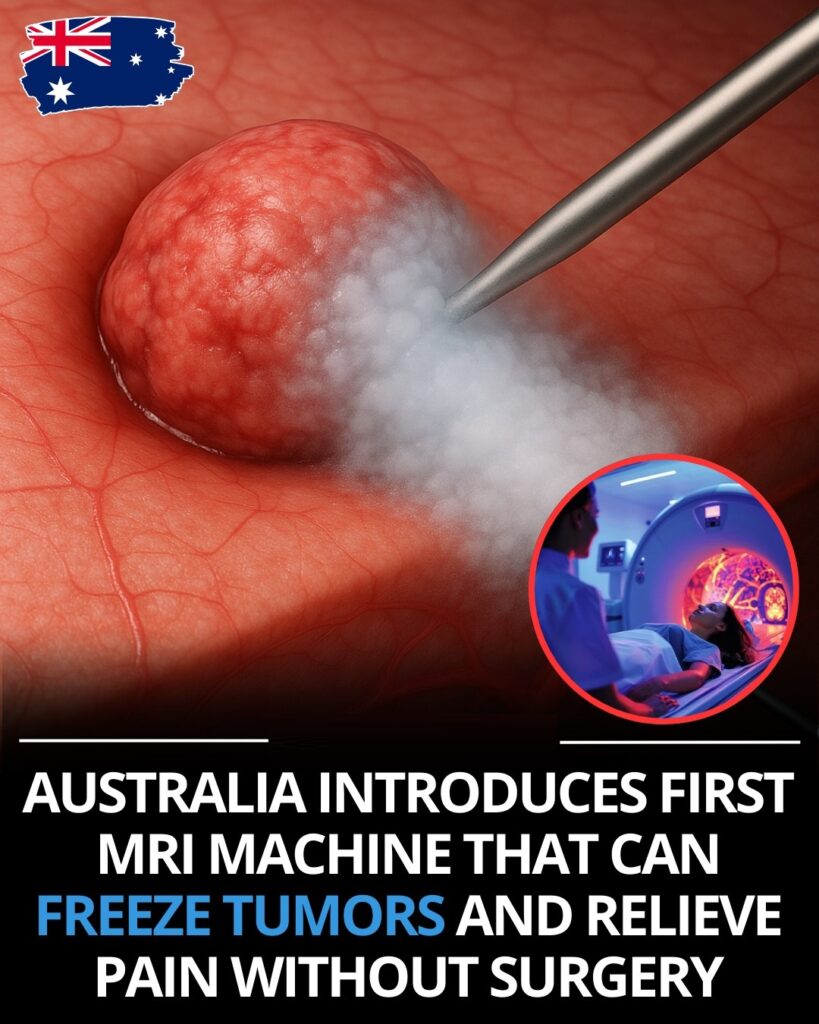
At the heart of this innovation is a gas-cooled needle that can be guided directly into a tumor using real-time MRI imaging. Once in place, the needle rapidly freezes the cancer cells, causing them to break down and die. The real-time MRI view allows specialists to monitor the process as it happens, ensuring accuracy and reducing the risk of damage to nearby organs or nerves. Unlike conventional surgical procedures, cryoablation does not require large incisions, stitches, or lengthy hospital stays.
One of the most notable advantages of this treatment is how quickly patients recover. Many people undergoing MRI-guided cryoablation are able to return home within 24 hours, a dramatic improvement over traditional cancer surgeries that can require days or even weeks of recovery. Reduced hospital stays not only improve patient comfort but also lower the risk of post-operative complications such as infections.
A powerful example of the system’s impact is the experience of 64-year-old Josephine Cordina. For months, she lived with severe spinal pain caused by a tumor, relying on strong medication just to sleep or complete daily activities. Her quality of life had been significantly reduced, and options were limited. After undergoing cryoablation treatment, Josephine woke up just hours later completely pain-free. The immediate relief highlighted the potential of this technology to change lives, particularly for patients who may not be suitable candidates for major surgery.
Beyond spinal tumors, MRI-guided cryoablation has broad applications across multiple cancer types. The technique can be used to treat soft-tissue tumors in organs such as the liver and kidneys, expanding its potential reach across Australia. This flexibility makes it a valuable tool in oncology, especially for patients with complex conditions or tumors located in sensitive areas of the body.
The installation of this advanced system is part of a nearly one-billion-dollar redevelopment project at Liverpool Hospital. A new state-of-the-art cancer center is planned to open in 2027, further strengthening the hospital’s role as a national leader in cancer care. Investments like this reflect Australia’s commitment to embracing innovative medical technologies that improve patient outcomes and reduce the burden of disease.
From an economic and healthcare perspective, minimally invasive treatments like cryoablation may also help reduce long-term costs. Shorter hospital stays, faster recovery times, and fewer complications can ease pressure on the healthcare system while allowing patients to return to their normal lives sooner.
Overall, MRI-guided cryoablation marks a promising advancement in cancer treatment. By offering precision, safety, and faster recovery, it provides renewed hope to patients who once faced limited or high-risk options. As this technology becomes more widely available, it has the potential to transform cancer care across Australia and set a new standard for non-invasive treatment worldwide.