A tapeworm infection may sound frightening, but it is usually easy to diagnose and treat. Learning what tapeworms are and how treatment works can help reduce worry and encourage people to seek medical care when needed.
What Is a Tapeworm
A tapeworm is a long flat parasite that lives inside the intestines of humans or animals. Tapeworms belong to a larger group of parasites known as cestodes. Their bodies consist of many small segments that can grow over time. The head of the tapeworm contains tiny hooklike structures that allow it to attach to the intestinal wall. Once attached, the tapeworm absorbs nutrients from the food that the host eats. This allows the parasite to grow while depriving the host of valuable nutrients.
Tapeworms can grow surprisingly long. Some species can reach several feet in length while living inside the human body. Although this may seem alarming, many infections cause only mild symptoms at first. The seriousness of an infection depends on the species of tapeworm and the overall health of the person who is infected.
How People Become Infected
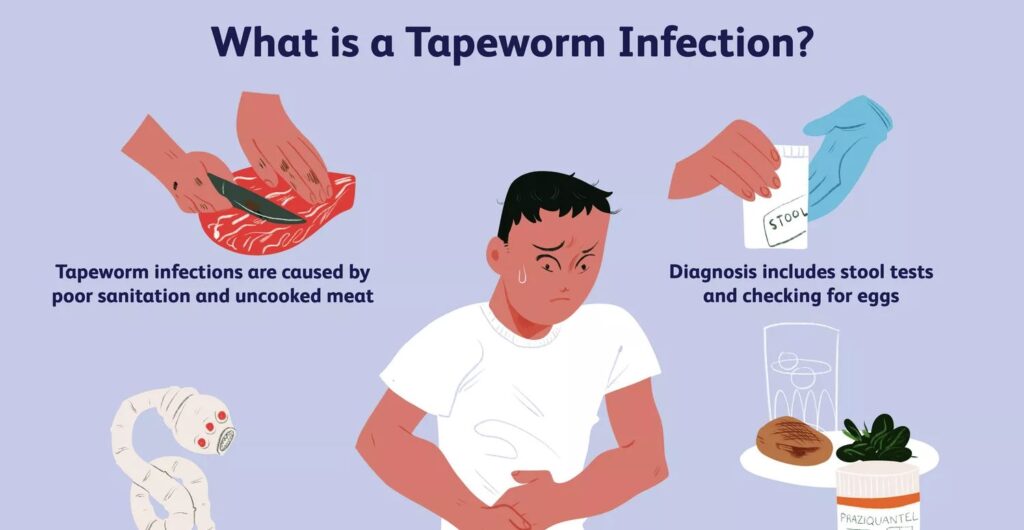
People can become infected with a tapeworm in several ways. The most common method of infection is by eating raw or undercooked meat. Pork beef and fish are the most frequent sources since these animals can carry tapeworm larvae. If the meat is not cooked long enough or at a high enough temperature, the larvae can survive and enter the human digestive system.
Another way infection can occur is by consuming food or drinking water that contains tapeworm eggs. These eggs can be present in contaminated soil and can spread when proper hygiene practices are not followed. In regions with limited access to clean water and sanitation, the risk is especially high.
Poor handwashing habits also increase the risk of infection. Tapeworm eggs can be microscopic and may spread to surfaces, food, or other people if proper cleanliness is not maintained. Because of this, good hygiene plays a major role in preventing infection.
Common Symptoms of Tapeworm Infection
Some individuals experience no symptoms at all, which can make the infection difficult to notice. Others may develop mild symptoms that slowly become more noticeable. Common symptoms include the following:
• Stomach pain or discomfort
• Nausea or occasional vomiting
• A change in appetite either increased or decreased
• Fatigue and weakness
• Unexplained weight loss
• The presence of tapeworm segments in stool
Tapeworm segments look like small white pieces that resemble grains of rice. They may move slightly, which is a strong indication of infection.
In rare situations, certain species of tapeworm can leave the digestive system and travel to other parts of the body. If this happens, the infection becomes more serious and can affect organs such as the brain, liver, or muscles. These cases require immediate medical treatment.
How Tapeworm Infection Is Diagnosed
Doctors diagnose tapeworm infections through a combination of symptoms, medical history, and laboratory tests. The most common test involves examining a stool sample under a microscope to look for eggs or segments. In some cases, blood tests may be used to detect the immune response created by the parasite.
If the infection has spread outside the intestines, imaging tests such as ultrasound, computed tomography, or magnetic resonance scans may be used to identify cysts in other areas of the body.
How Tapeworm Infection Is Treated
Treatment is usually simple and highly effective. Anyone who suspects a tapeworm infection should seek medical care to receive the correct medication.
Anti Parasitic Medication
The primary treatment for tapeworm infection is oral medication that eliminates the parasite. These medicines work by weakening or killing the tapeworm, allowing the body to remove it naturally. The medication targets the parasite without harming the host, and most people need only a single dose or a short series of doses.
Follow Up Care
After treatment, doctors often request follow up stool samples. These tests confirm that the tapeworm has been fully removed and that no eggs or segments remain in the intestines. This step ensures that the infection has not returned.
Treatment for Complications
If the tapeworm has traveled outside the intestines, the treatment process may be more complex. Additional medication may be necessary for a longer period of time. Anti inflammatory medicine may also be required to reduce swelling caused by cysts. In rare situations, surgery may be needed to remove cysts that have formed in organs.
These advanced cases are less common but they must be handled by medical specialists due to the potential risks involved.
How to Prevent Tapeworm Infection
Preventing infection is possible with careful habits and awareness.
• Cook all meat thoroughly until it reaches a safe internal temperature
• Freeze fish properly before eating it raw or lightly cooked
• Wash hands with soap and clean water before meals and after using the bathroom
• Drink water from clean and trusted sources
• Clean kitchen surfaces and utensils regularly
• Avoid eating food prepared in unsanitary environments
These simple steps can significantly reduce the chance of becoming infected.
Tapeworm infections can sound alarming, but they are usually easy to diagnose and treat. With prompt medical attention and proper medication, most individuals recover fully. Good hygiene and safe food preparation are powerful tools for preventing infections in the first place.
If you would like, I can expand this even further into a full research style article, a child friendly version, a more dramatic version, or a social media style post.